
One shop, three trades, one source of truth: Prefab software
Short answer: MSUITE is prefab software that supports multi-trade prefabrication workflows by connecting design, fabrication, and installation in one cloud platform. Mechanical, electrical, and plumbing teams model in Revit, push work to a shared fab shop queue, track every assembly by barcode, and see delivery and install status in the field. Every trade works from the same current data, so the shop builds the right thing once.
That matters well beyond MEP specialty shops. General contractors, subcontractors, and self-performing construction firms are all moving work off the jobsite and into controlled shops. The pressure is the same everywhere: too few skilled workers, tighter schedules, and owners who expect AI-era speed on data centers, hospitals, and plants.
The firms winning that work treat prefabrication as a production system, not a side project. This article explains what multi-trade prefab is, why 2026 is forcing the shift, and the five-step BIM-to-FAB-to-Field workflow MSUITE uses to run mechanical, electrical, and plumbing assemblies through one platform.
What is multi-trade prefabrication?
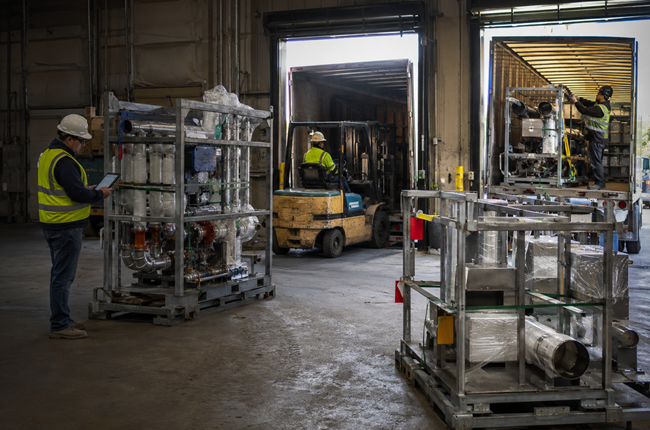
Multi-trade prefabrication is the practice of building assemblies for more than one building system (mechanical, electrical, plumbing, and often fire protection and structural supports) off site in a controlled shop, then shipping them to the jobsite ready to install. Common examples include multi-trade corridor racks, pipe spools, conduit racks, bathroom pods, headwall units, and skid-mounted mechanical rooms.
Prefab software is the system that manages that work. It turns a coordinated BIM model into fabrication packages, schedules and tracks shop production, manages material, and confirms delivery and installation in the field.
The word “multi-trade” is the hard part. A single-trade pipe shop can survive on spreadsheets and whiteboards. A rack that carries ductwork, domestic water, conduit, and cable tray cannot. It needs one model, one sequence, and one status for every component, no matter which trade owns it.
Why construction firms are moving to multi-trade prefab software in 2026-27
Four forces are pushing trade contractors and builders toward the shop at the same time.
- The labor gap is structural. Associated Builders and Contractors estimates the industry must attract 349,000 net new workers in 2026 and 456,000 in 2027 just to keep labor supply and demand in balance (ABC). ABC’s chief economist notes that most of 2026 demand comes from retirements, not growth. Prefab lets a smaller crew produce more, in a shop where apprentices can be productive faster.
- Data centers are the growth market, and they are MEP-dense. ConstructConnect reports $81.5 billion in U.S. data center construction starts through June 2026, already above the full-year 2025 total of $72.5 billion. The average project has more than doubled in size since 2022, to nearly 700,000 square feet (ConstructConnect). Deloitte’s 2026 outlook also names AI-driven data center and energy work as the industry’s brightest spot, against projected growth in structures investment of only about 1.8% (Deloitte). Repetitive power, cooling, and piping assemblies are ideal for multi-trade prefab.
- Contractors expect growth and are adopting AI. In the AGC and Sage 2026 outlook, data centers posted the strongest net reading of any segment at 57%. 61% of firms now use AI or plan to increase AI investment, up from 44% a year earlier (Sage and AGC). ServiceTitan’s 2026 survey of more than 1,000 commercial contractors found 38% report measurable business impact from AI, up from 17% in 2025 (ServiceTitan via Barchart).
- Prefab works, and trade contractors benefit most. In Dodge Data & Analytics’ Prefabrication and Modular Construction SmartMarket Report (2020), 85% of trade contractors reported greater schedule certainty and 88% reported improved quality from modular methods. At least 80% of users cited better cost predictability and less waste (Construction Business Owner; pbctoday). For prefabrication specifically, Dodge found trade contractors were the biggest beneficiaries on schedule and budget.
The catch: AI and prefab both depend on clean, connected data. A shop that runs on paper cannot feed an AI tool, and it cannot coordinate three trades on one rack.
How MSUITE orchestrates multi-trade prefab: BIM to FAB to Field in 5 steps
MSUITE, powered by DEWALT, connects three teams that usually work in silos: VDC and design, the fabrication shop, and field installation. Here is how one multi-trade assembly moves through the platform.
- Model and spool in BIM. VDC teams work in Autodesk Revit with the MSUITE BIM plug-in. Auto Spool groups components into fabrication assemblies using construction logic and project parameters. Automated sheets with smart dimensions and tags, hanger tools, and fabrication schedules replace hours of manual detailing. MSUITE reports that contractors cut spool generation time by up to 70%.
- Push one package to the shop. Spools, sheets, and cut data go straight from Revit or Fabrication CADmep into MSUITE FAB. Work that arrives as CAD, PDF, or a field sketch lands in the same queue, so electrical and plumbing packages do not live in separate inboxes.
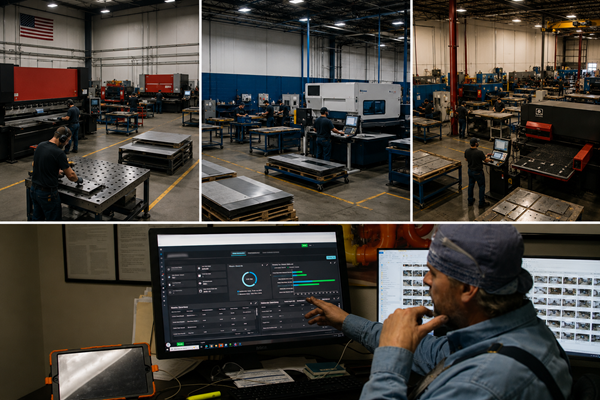
- Build in sequence, on every trade. The shop floor sees only the work that needs to be done, in install order. Barcodes track each assembly through cutting, welding, assembly, and QA. Integrations with machines such as TigerStop, RazorGauge, Watts, HGG, and PypeServer feed cuts from the model to the saw and capture productivity data automatically.
- Ship and receive with proof. Shipment requests, bills of lading, and due dates are managed between shop and field. Crews scan material on arrival, so superintendents know exactly which racks, spools, and kits are on site.
- Install, track, and learn. Advanced work packages guide field crews, and install status flows back to the office in real time. Automated timesheets and Power BI-ready reports turn every job into estimating data for the next bid.
The result is a closed loop: the model drives the shop, the shop drives the field, and field data improves the next model.
What multi-trade prefab looks like for each trade
| Trade | Typical prefab assemblies | Where one platform helps |
| Mechanical | Pipe spools, hydronic and chilled water skids, duct sections, equipment supports | Auto Spool, weld and cut tracking, machine integration for pipe cutting |
| Plumbing | Domestic water and waste spools, in-wall carriers, bathroom pods, headwalls | Spooled sheets with dimensions and tags, install-order sequencing |
| Electrical | Conduit racks, pre-wired assemblies, light fixture whips, kitted material | Shared shop queue for model, CAD, or PDF work; barcode tracking; field receiving |
| Multi-trade | Corridor racks, data center power and cooling modules, mechanical room skids | One status for every component, regardless of which trade owns it |
Why general contractors and subcontractors should care: It’s a force multiplier.
For subcontractors, a connected shop is a capacity multiplier. The same crew can take on more work when detailing is automated and shop time is measured, not guessed.
For general contractors and construction managers, multi-trade prefab shrinks the most congested part of the schedule. Fewer trades stacked in the same ceiling space means fewer clashes, fewer safety exposures, and better schedule certainty.
For firms building an AI strategy, this is the foundation. AI tools for estimating, scheduling, and productivity forecasting need structured, historical production data. MSUITE captures data passively as a byproduct of daily work: hours per spool, throughput per station, and shipped-versus-installed status. ServiceTitan’s research found the most common path to AI adoption is AI embedded in existing software, used by of adopting contractors (ServiceTitan). A clean prefab data stream makes that possible.
Customers note the flexibility. Josh Olberding, VDC Director at Midwestern Mechanical, said other tools locked his team into fixed workflows, and MSUITE’s flexibility changed that.
Frequently asked questions
How does MSUITE support multi-trade prefabrication for MEP contractors?
MSUITE connects BIM, fabrication, and field teams in one cloud platform. MSUITE BIM automates spooling and sheets in Revit, MSUITE FAB manages shop production and material for every trade, and field tools track receiving and installation. All three trades work from the same live status.
Can fabrication shop software manage mechanical, electrical, and plumbing prefab in one platform?
Yes. A modern fabrication management platform accepts work from BIM models, CAD files, PDFs, or field sketches. It then sequences that work in one shop queue and tracks each assembly by barcode, whichever trade owns it.
What is the difference between prefabrication and modular construction?
Prefabrication builds components or assemblies off site, such as pipe spools or conduit racks. Modular construction builds larger volumetric units, such as bathroom pods or full rooms. Both rely on the same model-to-shop-to-field workflow.
Is prefab software only for large contractors?
No. Cloud-based prefab software scales from a single shop bay to multiple facilities. Smaller trade contractors often see the fastest payback because automation frees scarce detailers and foremen.
How does prefabrication help with the construction labor shortage?
Shop work is safer, more repeatable, and easier to staff than jobsite work. ABC estimates the industry needs 349,000 new workers in 2026, so moving labor hours into a controlled shop helps firms deliver more with the crews they have.
How does prefab connect to AI in construction?
AI tools need structured data. Prefab software records hours, throughput, and status for every assembly, which gives estimating, scheduling, and forecasting tools reliable history to learn from.
Build more with the crews you have
The 2026 market rewards construction firms that can deliver complex MEP scopes faster, with fewer people on site. Multi-trade prefabrication is how leading trade contractors and builders are doing it, and connected prefab software is what makes it repeatable across mechanical, electrical, and plumbing.
See MSUITE in action. Book a free demo to see how your team can run every trade’s prefab from BIM to FAB to Field in one platform.
Sources
- ABC: Construction Industry Must Attract 349,000 Workers in 2026
- Deloitte: 2026 Engineering and Construction Industry Outlook
- ConstructConnect: August 2026 Data Center Report
- Sage and AGC: 2026 Construction Hiring and Business Outlook
- ServiceTitan 2026 Commercial Specialty Contractor Industry Report (press release)