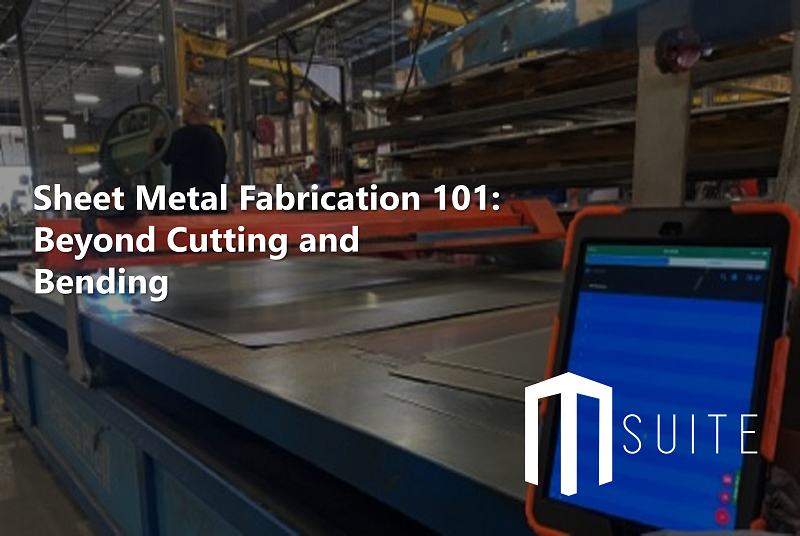
Sheet metal fabrication is the process of cutting, bending, forming, and assembling flat sheet metal stock into finished components for installation. In MEP construction, sheet metal fabrication primarily produces HVAC ductwork, custom enclosures, plenums, and mechanical housings that are built in a controlled shop environment before delivery to the job site. A sheet metal fabrication shop uses a combination of automated equipment including plasma tables, press brakes, and roll formers alongside hand assembly to produce components to precise specifications.
Sheet metal fabrication is a valuable method for prototyping and production to make robust functional parts like brackets, panels, and enclosures. However, unlike other manufacturing methods, sheet metal fabrication requires many different processes to manipulate sheet metal. These various processes may involve cutting the sheet metal, shaping it, or joining separate pieces together. This article highlights sheet metal fabrication processes, their work, and the best use cases for your fabrication shop.
Sheet Metal Fabrication and What Is It?
Sheet metal fabrication is a manufacturing process for turning sheet metal into functional parts. In this article, we have divided the functions into cutting, deformation, and assembly.
Common sheet metals include stainless steel, steel, zinc, aluminum, and copper and typically come in gauges between 0.25 and 0.006 inches (0.635 and 0.015 centimeters) thick. Thicker and thinner gauges vary based on malleability, with heavy-duty parts demanding applications with thicker models.
For partially hallow or flat parts, sheet metal fabrication can be a cost-effective alternative to machining and casting, which minimizes material waste.
Sheet metal fabrication is widely popular for consumer and industrial parts and in narrow markets such as automotive, aerospace, energy, and robotics.
Cutting Sheet Metal
Cutting the material is one of the three primary methods to manipulate sheet metal. In this case, sheet metal fabrication is considered a subtractive manufacturing process because usable parts are made by simply removing sections of the material. Manufacturers can cut sheet metal using various pieces of machinery, some of which are unique to sheet metal fabrication.
- One of the critical techniques for sheet metal cutting is using a LASER cutting machining, which uses an intense, powerful laser direct through a mirror or lens. Laser cutting is precise, energy-efficient, and suitable for thin or medium sheet metal gauges, but may struggle to penetrate the most challenging sheet metal.
- WATER jet cutting is another sheet metal technique and process that relies on a high-pressure jet of water mixed with an abrasive substance to cut through the sheet metal. Water jet cutters are especially effective in cutting sheet metal with low melting points without generating high heat that can deform the metal.
- PLASMA cutting is another sheet metal cutting technique that creates an electrical channel of ionized gas, forming a jet of hot plasma to penetrate thick gauges of sheet metal. Although less accurate than water or laser jet cutters, plasma cutters are powerful and fast with low setup costs.
These three cutting machines have other applications for other materials besides sheet metals, but some methods are used solely for sheet metal fabrication.
The process of punching or piercing uses a die or punch to create a precise hole in sheet metal. In this method, sheet metal is laid between the two components as the punch penetrates the metal to reach the unique die. The punched circular pieces are removed and turned into scrap, but these circular pieces can also be used as new workpieces called blanking.
Similar equipment can be used to perforate sheet metal when creating many holes.
Metal Deformation of Sheet Metal
Sheet metal deformation is another major category of sheet metal fabrication processes. This group of methods includes many ways to manipulate and change sheet metal without cutting into it, such as bending the metal. Using a brake machine, a sheet metal fabricator can bend sheet metal in channels to the angle of up to 120 degrees and into U and V shapes. The malleable thinner gauges of sheet metal are easier to bend. Sheet metal manufacturers can also perform the opposite, removing the horizontal bend from strip-shaped pieces with decambering.
Stamping is another deformation process but can also be considered a subcategory. It involves using a hydraulic or mechanical stamping press equipped with a tool and die. Stamping is similar to punching, but the material does not require removal. Stamping’s applications include curling, drawing, embossing, flanging, and hemming.
Spinning is a sheet metal fabrication technique, unlike other deformation techniques, because a lathe is used to rotate the material being pressed against the tool. The method is similar to CNC turning or even pottery spinning and helps create rounded sheet metal parts: cylinders, cones, etc.
Less popular deformation processes for sheet metal include rolling and wheeling. Rolling sheet metal is placed between a pair of rollers to reduce its thickness (and increase consistency in thickness). Wheeling sheet metal is utilized to make compound curves.
Some sheet metal methods reside halfway between deformation and cutting. One example includes the technique of expanding sheet metal, which involves cutting multiple slits in the sheet metal and then stretching the sheet open like an accordion.
Assembly of Sheet Metal
Sheet metal deformation and cutting are two ways of forming sheet metal. A third way is an assembly, using standard fasteners or other methods.
Although not always considered a fabrication process, assembling disparate components of sheet metal parts using fasteners, such as bolts, screws, and rivets, is an essential part of the overall manufacturing process. In addition, other sheet metal fabrication processes like punching can be used to make holes for rivets and other fasteners.
Sheet metal components can be combined using welding, which applies heat to melt sections of the metal intended to join another element to form a solid connection. Common sheet metals like aluminum and stainless steel have excellent weldability. However, different metals may weld better with certain types of welding, such as an electron beam, resistance, arc, etc.
Selecting the Proper Sheet Metal Fabrication Process
If you’re already well underway with designing sheet metal parts, chances are you have a great understanding of the fabrication processes used by the designers. Some CAD utilities like Dassault Systemes, Solidworks, and Autodesk Fusion 360 help you master correlated features with sheet metal manufacturing processes like stamping and bending.
Regardless of your Level of Experience – Professional or Novice, sheet metal fabricators with proven expertise can help you finalize your designs and help you select the best processes like water jet and laserjet cutting to produce a quality end product.
Frequently Askes Questions: Sheet Metal Fabricaton
What is sheet metal fabrication?
Sheet metal fabrication is the manufacturing process of transforming flat metal sheet stock into finished components through cutting, bending, punching, forming, and joining operations. In MEP construction, this primarily means HVAC ductwork, custom enclosures, and mechanical assemblies produced in a fabrication shop before delivery to the job site.
What processes are used in sheet metal fabrication?
The core processes are cutting (plasma, laser, shear), bending and forming (press brake, roll former), punching (CNC turret punch), and joining (welding, riveting, fastening). For HVAC ductwork specifically, Pittsburgh seam and snap lock forming are standard methods for longitudinal seams. Plasma and laser cutting tables driven by CAD or BIM-generated files are standard in modern MEP sheet metal shops.
What is the difference between sheet metal fabrication and pipe fabrication?
Sheet metal fabrication primarily produces ductwork, enclosures, and formed components from flat stock. Pipe fabrication produces pre-assembled pipe sections called spools from round pipe stock, with welded or threaded joints. Both are MEP shop operations, but they use different equipment, different documentation (duct shop drawings vs. isometric spool drawings), and different quality standards.
How does BIM improve sheet metal fabrication?
BIM allows sheet metal contractors to model ductwork systems in a coordinated 3D environment, export fabrication-ready geometry directly to cutting tables and forming equipment, and generate cut lists and shop tickets automatically. When BIM connects directly to the sheet metal shop, manual re-entry is eliminated, drawing revisions update automatically, and the shop floor always works from the current set.
How do sheet metal fabrication shops track production?
Modern sheet metal fabrication shops use fabrication management software to track each duct section or assembly from drawing release through cutting, forming, assembly, QA, and shipping. Real-time tracking replaces manual spreadsheets and floor walk-throughs and gives project managers live visibility into production status without calling the shop.
What equipment does a sheet metal fabrication shop use?
Common sheet metal shop equipment includes plasma cutting tables, laser cutters, CNC turret punch presses, press brakes, Pittsburgh seam machines, roll formers, and spot welders. Automated cutting equipment connected to BIM or CAD software, such as plasma tables that accept DXF files directly from design, significantly reduces setup time and improves cut accuracy.