Building Information Modeling (BIM) is revolutionizing the construction industry. It integrates various systems into a cohesive digital model. Among these systems, MEP—Mechanical, Electrical, and Plumbing—plays a crucial role. BIM MEP enhances the design and coordination of these systems. This integration leads to improved efficiency and reduced errors in construction projects. BIM technology provides a digital representation of a building’s physical and functional characteristics.
MEP BIM coordination services are essential for detecting and resolving potential clashes. They ensure that all systems work harmoniously within the building structure. In this article, we explore the importance and benefits of BIM MEP. Discover how it transforms construction projects and supports sustainable building practices.
What Is BIM MEP?
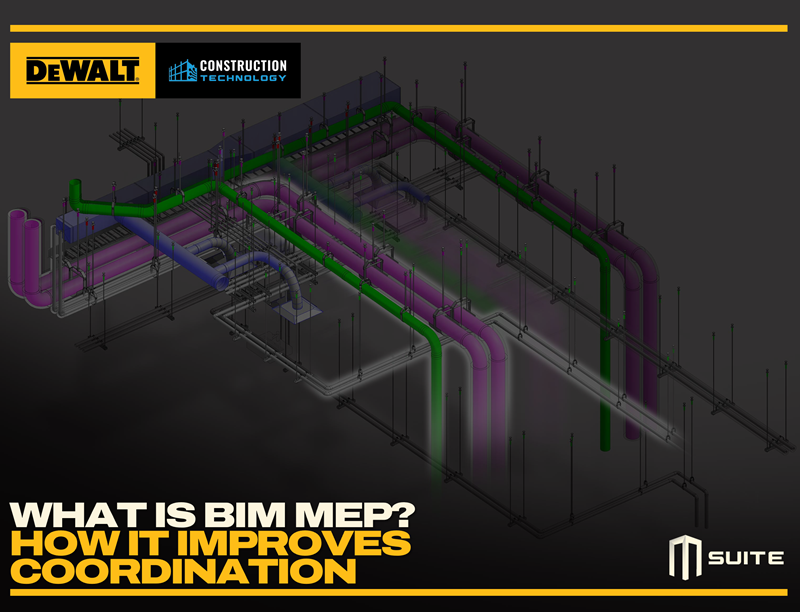
BIM MEP stands for Building Information Modeling for Mechanical, Electrical, and Plumbing systems. It’s the process of creating a coordinated digital model that integrates HVAC, piping, electrical, and plumbing systems into a single environment.
Instead of working from disconnected 2D drawings, teams operate from a shared model that shows how every system fits together. That visibility changes how projects are designed, coordinated, fabricated, and installed.
For contractors, BIM MEP is not just a design tool. It’s the foundation for production planning, prefabrication, and field execution.
Why BIM Matters for MEP Contractors
MEP systems are the most complex part of any building. They compete for space, require precise installation, and depend on tight coordination across trades.
Without BIM, teams run into predictable problems:
- Field conflicts between trades
- Rework caused by outdated drawings
- Delays waiting on coordination decisions
- Limited visibility into install readiness
BIM MEP solves this by giving teams a single source of truth before work begins.
Instead of reacting in the field, contractors can plan, coordinate, and sequence work upstream.
How BIM MEP Improves Coordination
At its core, BIM MEP is a coordination engine.
All systems are modeled together in 3D, allowing teams to:
- Visualize routing for duct, pipe, conduit, and cable tray
- Identify space constraints before installation
- Align systems across trades in real time
- Maintain consistency across design updates
This replaces fragmented coordination workflows with a connected, model-driven process.
The result is fewer surprises during construction and faster decision-making across teams.
Clash Detection: Eliminating Rework Before It Starts
One of the biggest advantages of BIM MEP is clash detection.
Clashes occur when systems overlap or interfere with each other. In traditional workflows, these conflicts show up in the field, where they are expensive to fix.
With BIM:
- Clashes are identified during coordination
- Teams resolve issues before fabrication
- Designs are adjusted before materials are installed
This shifts problem-solving upstream, where changes are faster and cheaper.
For contractors, this directly impacts:
- Labor efficiency
- Project schedules
- Overall profitability
The MEP BIM Modeling Process
A strong BIM MEP workflow follows a structured process:
1. Define Project Requirements
Teams establish system requirements, design criteria, and coordination goals.
2. Develop Initial Layouts
MEP systems are modeled in 3D to define routing and space allocation.
3. Coordinate Across Trades
All systems are integrated into a single model to identify conflicts and optimize layouts.
4. Detail for Fabrication
Models are refined with fabrication-level detail, including dimensions, materials, and connections.
5. Review and Optimize
Stakeholders review the model, resolve issues, and finalize for production.
This process ensures that what gets built in the field matches what was planned digitally.
Key Benefits of BIM MEP
1. Better Design Accuracy
- Detailed models reduce ambiguity and improve installation quality.
2. Faster Coordination
- Teams work from a shared model, eliminating back-and-forth between trades.
3. Reduced Rework
- Clash detection and coordination prevent costly field changes.
4. Improved Collaboration
- Architects, engineers, and contractors stay aligned throughout the project.
5. Greater Project Certainty
- With fewer unknowns, teams can plan and execute with confidence.
BIM MEP in Fabrication and Shop Production
This is where BIM MEP delivers the most value for contractors.
Instead of stopping at coordination, leading teams extend BIM into fabrication workflows.
With the right tools, BIM models drive:
- Pipe spool creation
- Sheet metal detailing
- Hanger placement and support layout
- Bill of materials generation
- Shop production planning
This creates a direct path from model to shop. See how it works.
What This Means in Practice
- Spools are created faster with fewer manual steps
- Shop teams work from accurate, consistent outputs
- Production can be tracked against the model
- Installation teams receive coordinated, ready-to-install components
This is how contractors scale fabrication without scaling headcount.
Connecting BIM to Field Execution
BIM MEP doesn’t stop in the shop. It extends into the field.
When models connect to field workflows, teams gain:
- Clear install sequences
- Accurate layout and positioning
- Real-time visibility into progress
- Faster response to design changes
This reduces the gap between planning and execution.
Instead of relying on static drawings, field teams work from live, coordinated data.
BIM MEP for Mechanical, Electrical, and Plumbing Systems
Mechanical Systems
BIM helps optimize duct routing, airflow, and equipment placement, improving system performance and install efficiency.
Electrical Systems
Teams can plan conduit runs, panel locations, and cable routing with precision, reducing conflicts and ensuring compliance.
Plumbing Systems
BIM supports efficient pipe routing, drainage planning, and space utilization, minimizing installation challenges.
Across all three, the benefit is the same: better coordination leads to better outcomes.
Choosing the Right BIM MEP Software
Not all BIM tools deliver the same value for contractors.
When evaluating BIM MEP solutions, look for:
- Native integration with design platforms like Revit
- Automation for spooling and detailing
- Support for fabrication workflows
- Real-time updates across teams
- Connectivity between BIM, shop, and field
The goal is not just to model systems, but to drive production from the model.
The Future of BIM MEP: From Models to Data-Driven Execution
BIM MEP is evolving beyond coordination.
The next phase is connected workflows and structured data.
Leading contractors are using BIM to:
- Feed fabrication and production tracking systems
- Connect shop data to project schedules
- Improve forecasting and capacity planning
- Build a data foundation for AI-driven insights
This shift is critical.
AI and advanced analytics depend on clean, structured data across BIM, fabrication, and field workflows. Without that foundation, predictive insights are not possible.
Contractors who connect these workflows gain a long-term advantage in productivity, planning, and execution.
Final Takeaway
BIM MEP has moved from a design tool to a core operational system for contractors.
It improves coordination, eliminates clashes, and reduces rework. More importantly, it connects design to fabrication and field execution.
For MEP contractors, the opportunity is clear:
- Stop treating BIM as a standalone process
- Start using it to drive production and delivery
That’s how teams build faster, reduce risk, and stay competitive in 2026 and beyond.